
- Procedure time
- About 2½ hoursOperative time
- Anesthesia
- Oral or IV sedation
- Setting
- Our procedure suite
- Downtime
- Ten days to two weeksEverybody heals differently
- Results last
- Five to seven yearsVaries with age and lifestyle
Where this operation comes from
Most patients who come to me for facial rejuvenation get a deep plane facelift. It is the operation I believe in, it is what I have built my practice around, and this page is not an argument against it.
But a particular patient turns up often enough to be worth describing. She is bothered by her neck. Her lower face is reasonably good, with some laxity along the jaw but nothing dramatic. She wants the neck addressed, and a full deep plane release is more than her face is asking for.
Treat the neck alone and you can end up with a clean neck under a jawline that stayed where it was.
That mismatch is the thing to avoid. The eye reads the lower face and the neck together, as one continuous line from the cheek to the collarbone. Sharpen one half of that line and leave the other, and the result can look unfinished even when the neck itself is excellent.
What the SMAS is
The superficial musculoaponeurotic system is a sheet of fibrous tissue lying between the fat under the skin and the deeper structures of the face. It is continuous with the platysma in the neck, which is exactly why it matters to this conversation. Work on the neck is work on the bottom end of the same sheet.
Because it is a continuous layer, tightening it along the jaw carries the tissue above it. That is the mechanism. Skin is not what holds a facelift, and a lift that pulls on skin gives you a tight-looking face for a short time and a wide scar for a long one.
How I do it
The incision follows the same path as my deep plane lift, around the contour of the ear where the skin changes texture. I lift the skin, expose the SMAS along the jawline and cheek, and secure it upward and backward to firmer tissue in front of the ear.
The difference is what happens underneath. In a deep plane lift I work below the SMAS and divide the retaining ligaments that hold it down, so the whole composite unit can move. Here I do not take that step. The layer is tightened where it lies.
When it is combined with a neck lift, which is the usual case, the platysma is treated through a separate incision under the chin, and the two halves of the repair are planned as one operation.
Who this suits, and who it does not
It suits someone whose main complaint sits at or below the jawline, whose midface is holding up well, and who wants the lower face to keep pace with a neck that is being treated.
How I decide is a physical thing, and it happens in the room. I put my hands on your face and move the tissue. I can feel how mobile the jawline and the midface are, I can see which way they want to go, and I can see which direction gives the most natural improvement. What I am judging is the laxity of the soft tissue underneath, and the skin is only part of that.
If you want the smaller operation, the question I am answering with my hands is whether the kind of tightening a SMAS lift gives will actually suit your face. When it will, this is a good choice. When moving the tissue that way starts to look pulled or swept, I will tell you so and recommend the deep plane, because a swept lower face is a result you would live with for years.
It is the wrong operation if your concern is the midface. Flattening of the cheek, a deep fold running from the nose to the mouth, descent through the middle third of the face: those need the ligaments released, and releasing them is what the deep plane operation is for. I would be doing you a disservice by offering you the smaller dissection and calling it equivalent.
If you have already had a facelift elsewhere and are considering revision, that is a separate conversation and depends heavily on what was done the first time.
Risks and recovery
The risks are those of any facelift. Hematoma, a collection of blood under the skin, is the one that needs attention quickly and is the reason I am reachable and want to see you early. Nerve injury is the one patients fear most; the facial nerve branches are the structures I am protecting throughout, and a smaller dissection does not remove that responsibility.
There is also scarring, which is unavoidable because an incision is unavoidable, and my job is to place it where it heals invisibly and to close it without tension. Numbness around the ears is expected for a period and resolves.
I will give you specific recovery instructions at your pre-operative visit, tailored to whether the neck is being treated at the same time. What I will say here is that swelling and bruising are part of the process for everyone, and that the face you see in the first two weeks is not the result.
Results
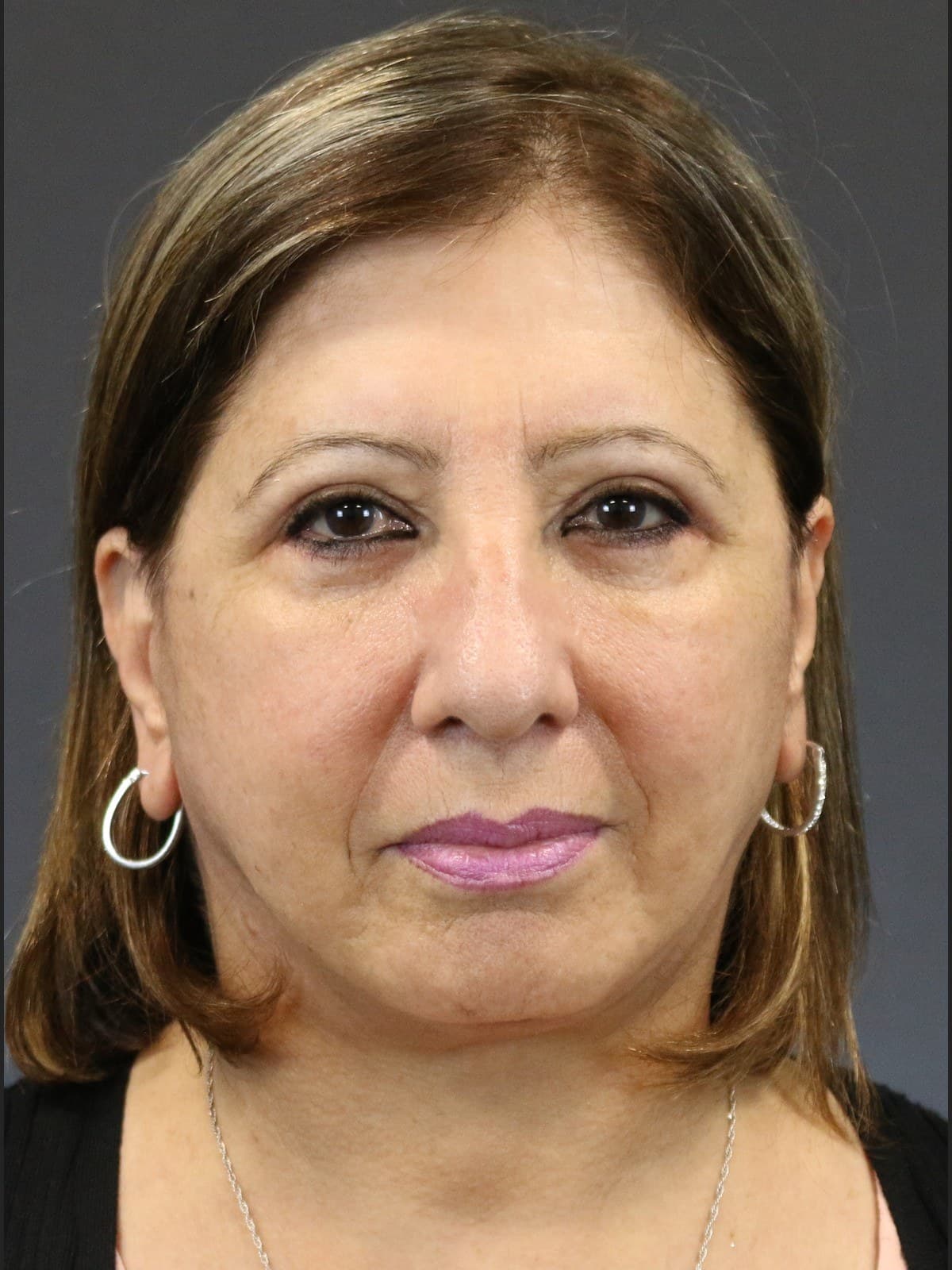
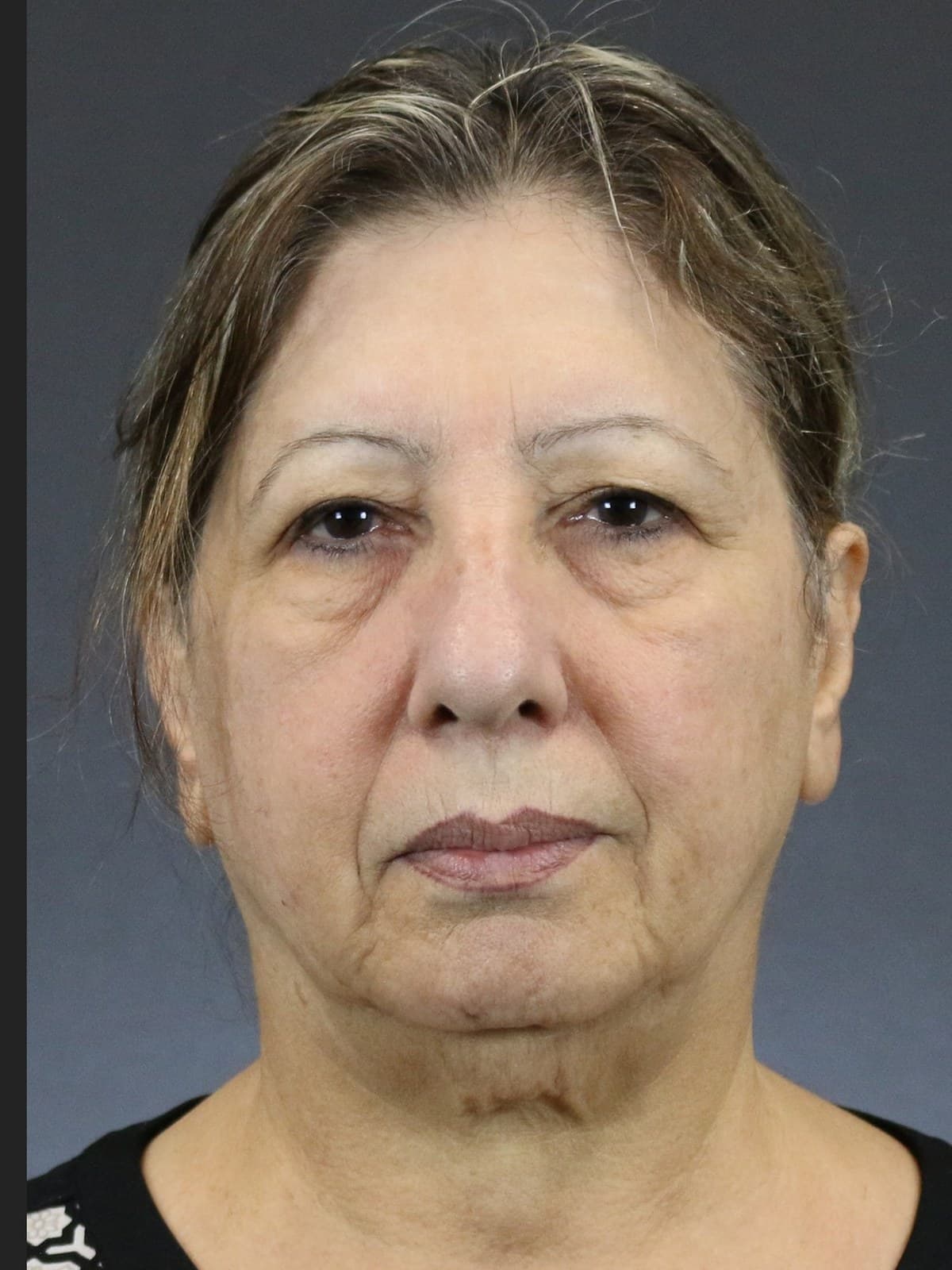
Before-and-after photographs of Dr. Keni’s smas facelift patients, at consistent angles and lighting.
Individual results may vary. The photographs shown are of actual patients of Dr. Keni who have consented to their use.
Common questions
- How is this different from a deep plane facelift?
- Both work on the SMAS, the fibrous layer that carries the muscles of the lower face. A deep plane lift goes underneath it and releases the ligaments that tether it, so the tissue is repositioned as one unit. A SMAS lift tightens the layer itself without that release. The deep plane does more, and for most of my facelift patients it is what I do.
- Then why would I have this one?
- The commonest reason in my practice is a neck. If you have come in for a neck lift and your lower face is only mildly lax, treating the neck on its own can leave a sharp neck under a jawline that has not moved. Adding SMAS support along the jaw keeps the two halves of the result speaking to each other.
- Is it a smaller operation?
- It is a smaller dissection, which is the point when the problem is smaller. It is still surgery, still done under anesthesia, and still carries the risks that come with an incision around the ear. Do not read it as a lunchtime version of a facelift.
- Will it last as long?
- I will not put a number on it here, because the honest answer depends on how much laxity you started with. What I will say at consultation is what I expect in your face specifically, and I would rather tell you that in person than publish an average.
Not sure this is your problem? Jowls and a softening jawline
Financing available through CareCredit. See financing options