
- Procedure time
- About 2 hoursOperative time
- Anesthesia
- IV sedationNo breathing tube
- Setting
- Our procedure suiteHome the same day
- Downtime
- One to two weeksNearer 7–10 days done in isolation
- Results last
- Seven to ten yearsThe muscle repair holds; skin varies
What actually changed
The platysma is a broad, thin sheet of muscle that runs from the collarbone up over the jaw. It is what gives a young neck its clean angle. Over time its front edges separate and its support loosens, and the sheet stops holding the shape.
Fat is the other half. It sits both above the platysma and beneath it, and those two compartments behave differently. Removing the superficial layer alone can leave the fullness that was bothering you largely intact.
A neck lift that only tightens skin is treating the one layer that did not cause the problem.
The chin nobody mentions
Some people unhappy with their neck have a neck that is anatomically fine and a chin that projects less than average. A weak chin shortens the distance between jaw and neck, and the result reads as fullness under the chin regardless of what the platysma is doing.
This is worth knowing before you consent to an operation on your neck. It is the kind of thing an assessment should catch, and it changes the recommendation completely.
Why it is usually done with the face
The jawline is the border between two things that age together. When the deep plane release is carried down into the neck, the face and neck move as one unit. That is the anatomically coherent way to do it, and why the two operations are so often discussed together.
That said, plenty of patients need one and not the other, and being told you need less surgery than you expected is a legitimate outcome of a consultation.
What the operation involves
It starts with a small incision under the chin, placed in the natural crease. Through it I lift the skin away and look directly at what is underneath: the fat layer, the muscle layer, and in particular the platysma, which is a broad fan-shaped sheet. As gravity draws it down over the years its front edges become prominent, and those edges are the bands you can see when you tense your neck.
In most cases I trim the muscle and suture the edges together into a sling, anchored laterally to the mastoid bone. That sling is what gives the repair its durability. Where there is fat sitting beneath the platysma, the same opening lets me address it and the structures below it.
That leaves the excess skin. It is undermined, redraped, and the excess is removed through incisions that hide behind the ear.
The exact technique is decided in surgery. I know from examining you what I am likely to do. I do not know for certain until I can see the layers.
If you want the neck alone
I will usually recommend doing this alongside the face, because the jawline is the seam between two things that aged together. But some patients genuinely do not want the face touched, and that is a reasonable position to hold.
In that case the incision is modified. It runs mainly to the bottom of the earlobe, or from where the earlobe attaches around behind the ear, with a short limb extending into the hairline. It hides well, and it still lets you wear your hair up.
Scars, and how they settle
Incisions take a while to look like nothing. By six months yours will have faded and most of the redness will be gone. By a year it is typically a fine white line you would have to inspect closely to find.
An incision can migrate slightly downward as things heal. If that happens it is usually straightforward to touch up, and I would tell you so at your six-month visit before you had to ask.
What holds, and what softens again
The muscle repair is the durable part. What varies is skin. During surgery I tighten as much as I safely can and redrape as smoothly as the tissue allows, but once the swelling settles and everything relaxes into its natural position, some patients see a little laxity or fine wrinkling return in the neck skin.
How much depends on your anatomy, the quality of your skin, your age, weight fluctuation, sun exposure, smoking, and how you look after yourself afterward. It is always better than having done nothing, and I would rather you heard the honest version now.
If you would be happy with eighty percent improvement, you are going to be happy. I can typically deliver that much or more.
What can go wrong
Hematoma is the one I watch for, as with any lifting procedure. It is a collection of blood under the skin, it nearly always declares itself in the first twenty-four hours, and your day-one visit exists to catch it. We guard against it with clear instructions on medications and activity, careful cauterization during surgery, and a drain for the first few days.
Numbness is universal here, and it lasts longer in the neck than the face because more skin is undermined. Expect several months, and often a full year, for sensation to come back.
Infection is uncommon. The procedure is done under sterile conditions with a short course of prophylactic antibiotics.
Results
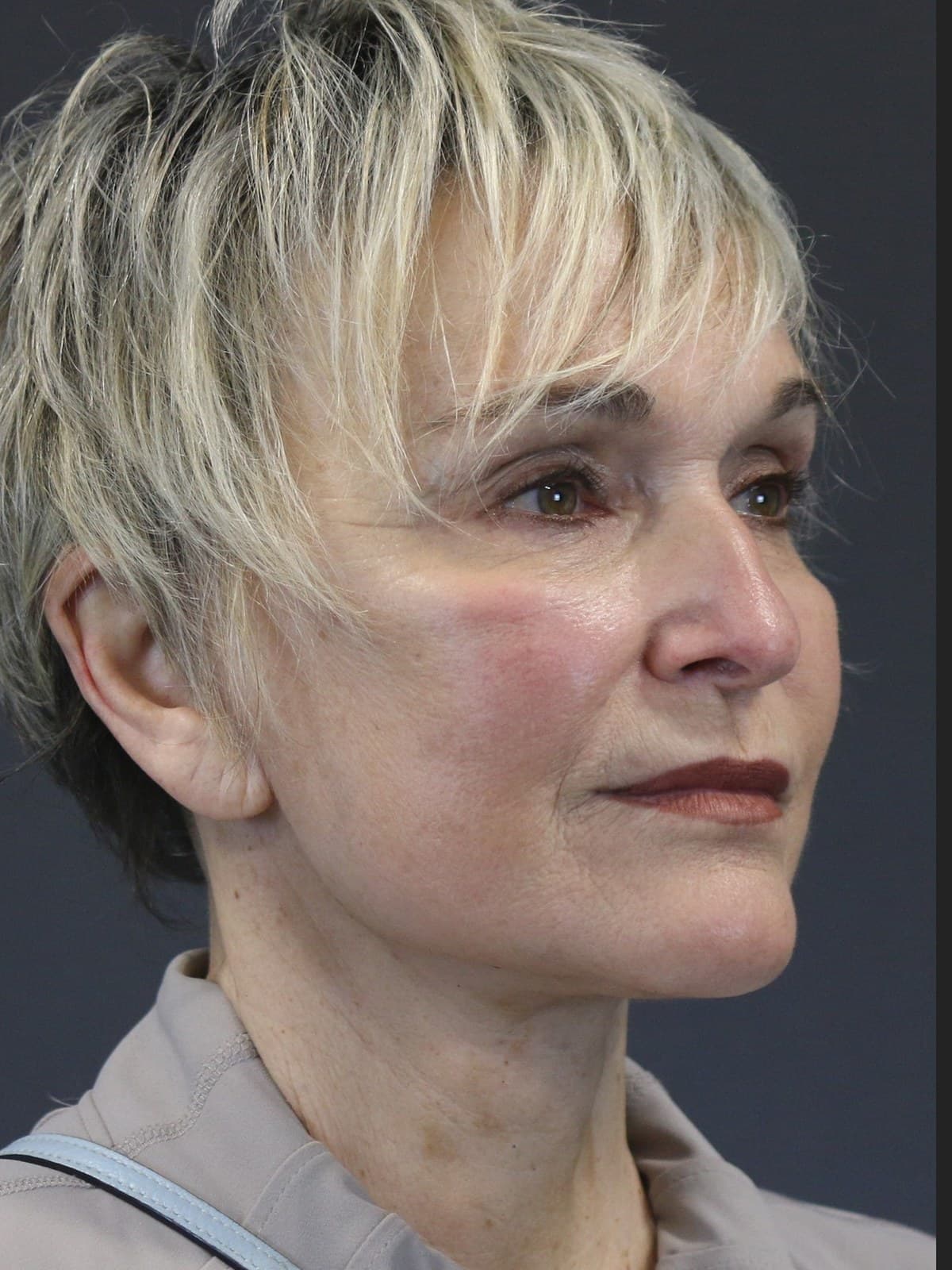
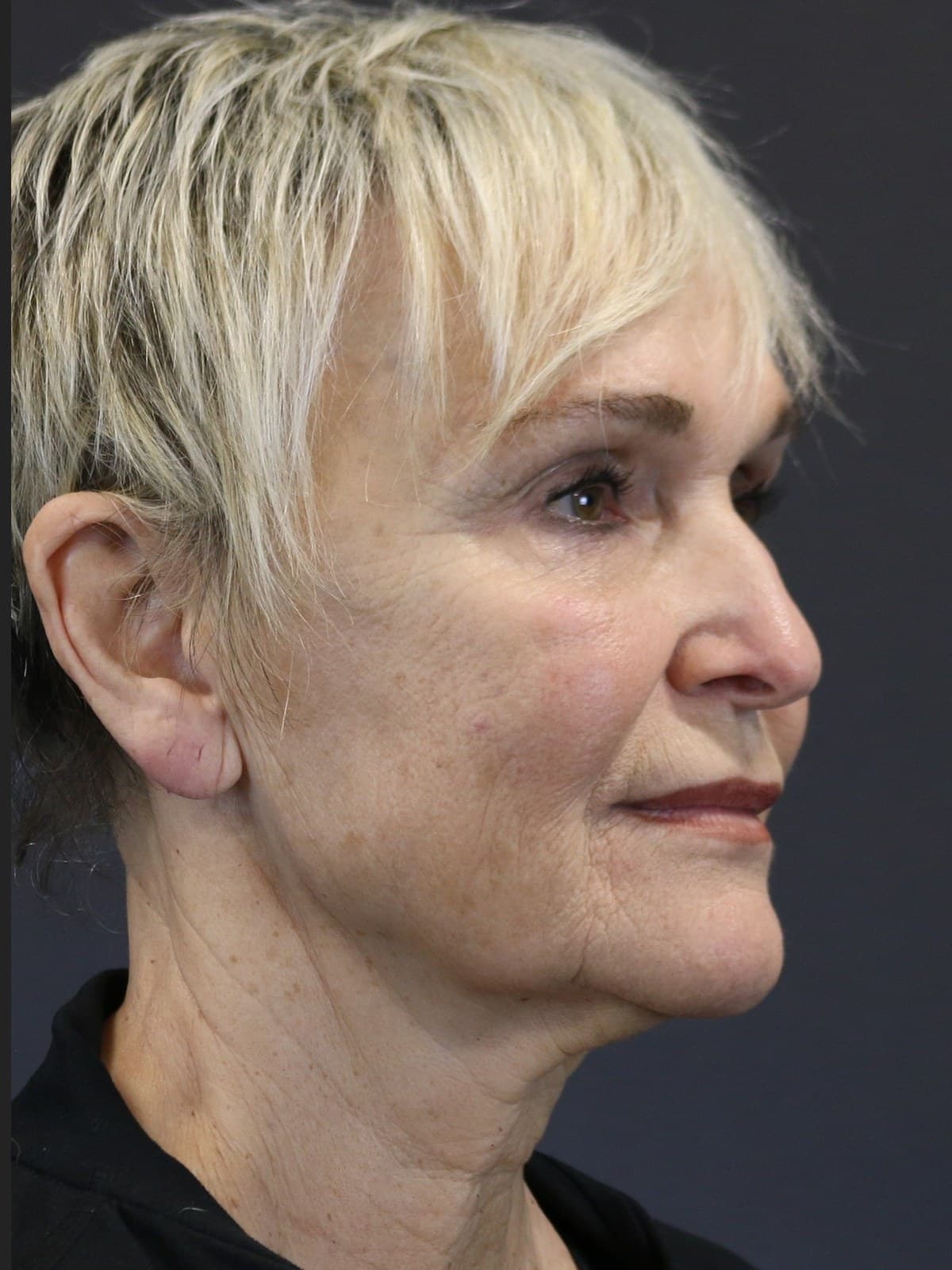
Before-and-after photographs of Dr. Keni’s neck lift patients, at consistent angles and lighting.
Individual results may vary. The photographs shown are of actual patients of Dr. Keni who have consented to their use.
Common questions
- Why won't tightening the skin fix my neck?
- Because in most necks the skin is not the problem. The platysma, the broad sheet muscle of the neck, separates and loses its support, and fat accumulates above and below it. Pulling skin over that does not change the shape underneath, and the tension tends to relax within a year or two.
- What are the vertical bands in my neck?
- Those are the front edges of the platysma. As the muscle loses its support, its medial borders become visible as cords. Addressing them means treating the muscle, not the skin covering it.
- Do I need a facelift as well?
- Often, and it is worth asking honestly. The face and neck age as one continuous unit. Treating the neck alone can leave a mismatch at the jawline, and treating the face alone can make an untreated neck more conspicuous. Which combination applies to you is a consultation question.
- Is liposuction alone enough?
- Sometimes, in younger patients with good skin quality, strong underlying structure, and fat as the only issue. It is a much smaller operation when it is the right one. It is also frequently offered to people it will not help, which is why the assessment matters more than the technique.
Not sure this is your problem? Neck bands and fullness
Financing available through CareCredit. See financing options