
- Procedure time
- 30 minutes to an hourPartial or full face
- Downtime
- Ten days to two weeksPink or blotchy for about six weeks
- Results last
- About seven yearsDepends heavily on sun exposure
Two kinds of aging, one face
Structural aging is descent and deflation, the domain of surgery. Surface aging is largely cumulative sun exposure: pigment, texture, fine lines, and the loss of the smooth light reflection that young skin has.
You can restore a jawline perfectly and still look tired, because the viewer is also reading the surface.
This is why resurfacing sits in the plan alongside surgery rather than in competition with it. Neither substitutes for the other, and the sequence in which they are done matters.
Why fractional
Fully ablative resurfacing removes the entire surface layer. It is powerful, and the healing burden and risk profile reflect that.
Fractional treatment instead creates a grid of microscopic treated columns with untreated skin left between them. Those untreated bridges are reservoirs the skin heals from, which is what makes a meaningful depth of treatment possible without the recovery of the older approach.
Where surgery stops
Lines around the mouth are the clearest example. No facelift addresses them. They sit in a region a lift does not meaningfully move, and pulling harder to try produces distortion. The same is true of fine crepe texture at the lower eyelid, where removing more skin is the wrong answer.
These are resurfacing problems. Recognizing them as such is what stops a patient being offered a bigger operation than their concern actually warrants.
What the laser is doing
I use the Lutronic eCO2. It creates microscopic columns of injury through the skin, and your body heals them with new skin and new collagen. The untreated skin between those columns is what makes the healing manageable.
How deep and how dense those columns go is a setting, and settings are a trade. To get a result worth the recovery, I have to treat fairly intensely. A gentle pass gives you a gentle result and the same weekend indoors.
Recovery, and I mean this literally
This is the procedure I am most blunt about, because a patient who has not been warned will think something has gone badly wrong.
For the first several days expect real crusting, oozing, and scabbing. There is usually little actual pain, but a fair amount of itching or burning. You will keep the skin moist constantly with Aquaphor and other topicals, and in some cases vinegar soaks.
For that first week your face is going to be an intense bright red. You will look in the mirror and not recognize yourself, and you will be upset with me if I have not told you this in advance.
By about a week the crusting and oozing have settled and you are left with the redness. No makeup for the first ten days, or eight at the very least, and then only depending on how you are healing. After that you have to be genuinely careful about sun.
The red fades to pink, and the pink takes its time. At six weeks there can still be blotches of it.
If you want to read the whole two weeks before you decide, there is an honest day-by-day account of CO2 recovery on facelove.info.
Why I so often pair it with surgery
A facelift repositions structure. It does nothing at all for the quality of the surface. Doing both in one recovery addresses the two halves of what has changed, and the combined result is disproportionate to either one alone.
One plus one comes out closer to three.
The other group I treat is younger, with acne scarring. Different problem, same tool, and often a very satisfying result.
What can go wrong
Prolonged healing, where the redness or pink lingers for weeks or occasionally months longer than expected.
Burns to skin and deeper tissue. The settings are chosen for the result I expect your skin to tolerate, which is the main protection against this.
Infection or cold sores. If you are prone to cold sores, tell me, and you will be covered with antivirals as well as antibiotics.
Results
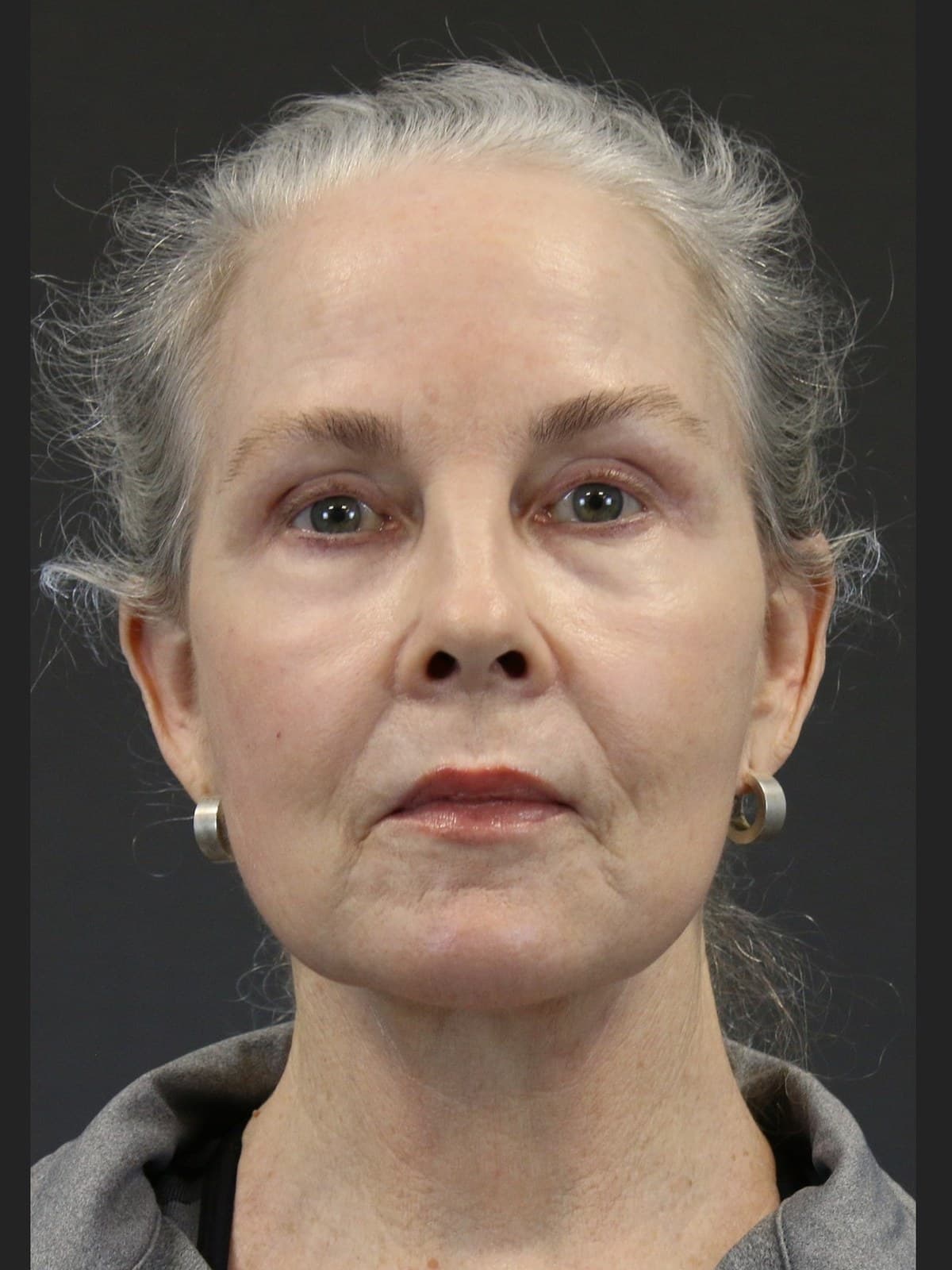
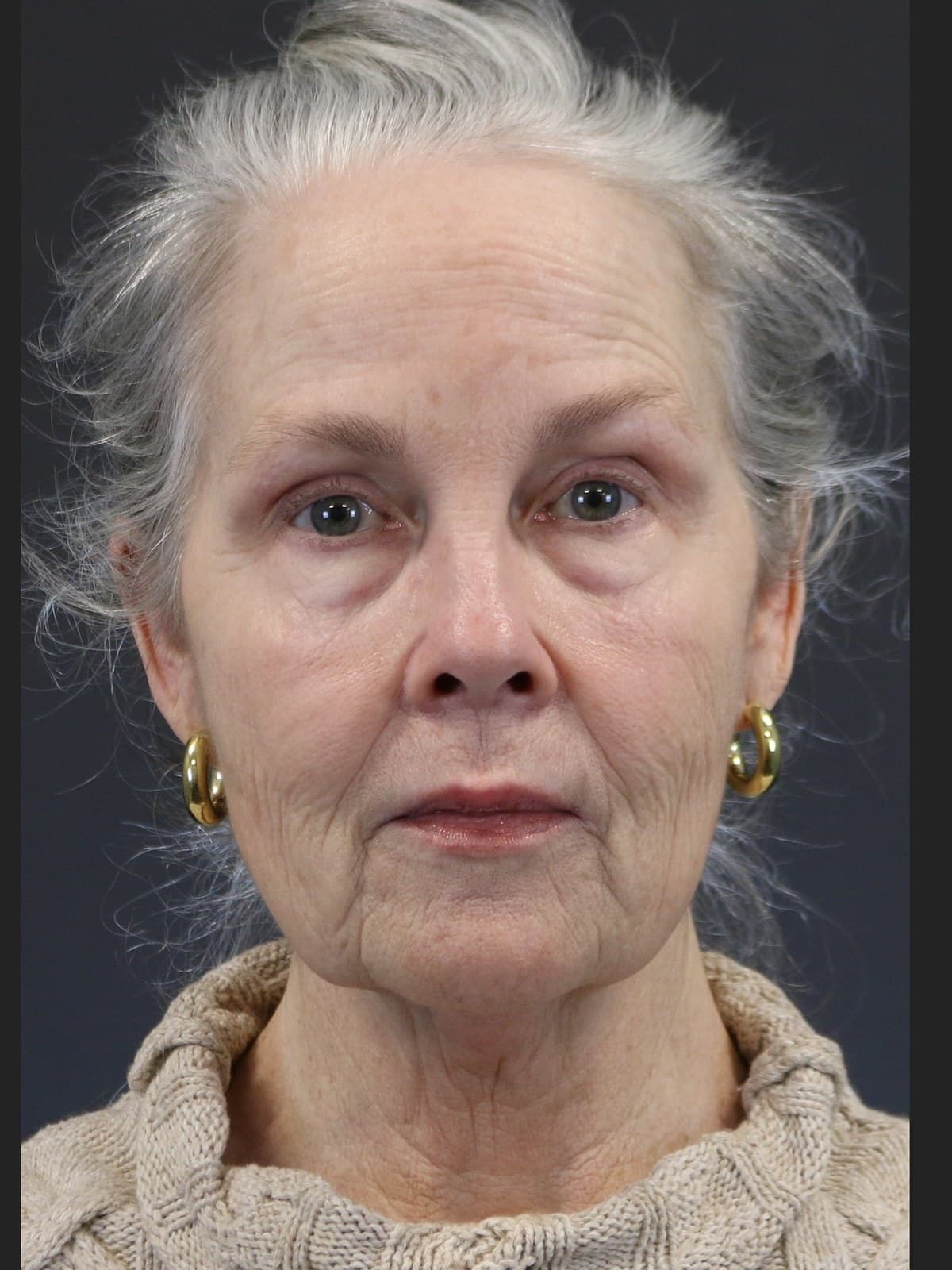
Before-and-after photographs of Dr. Keni’s fractional co2 laser patients, at consistent angles and lighting.
Individual results may vary. The photographs shown are of actual patients of Dr. Keni who have consented to their use.
Common questions
- What does CO2 resurfacing actually treat?
- Surface and quality: fine lines, texture, sun damage, pigment irregularity, and the crepe-like change that appears around the eyes and mouth. It will not lift anything, and it will not replace lost volume.
- Why won't a facelift fix my skin?
- Because a facelift repositions tissue; it does not change the surface it is repositioning. A patient with well-restored structure and untreated sun damage still reads as older than they are. The two are separate problems that happen to occur together.
- What does 'fractional' mean?
- The laser treats the skin in a pattern of microscopic columns and leaves untreated bridges of tissue between them. The entire surface is never removed at once. Those bridges are what allow the skin to heal faster than it would after fully ablative resurfacing.
- Is there real downtime?
- Yes, and it should be planned for. Anyone who minimizes it is selling you something. Resurfacing creates a genuine wound that heals over a defined period, and sun protection afterward is not a suggestion. The specifics depend on depth and area, which are set at consultation.
Not sure this is your problem? Skin texture, tone and sun damage
Financing available through CareCredit. See financing options