
What is actually happening
Most of what people call aging skin is accumulated sun exposure. Over decades, ultraviolet light breaks down the collagen and elastin in the dermis and disrupts the cells that produce pigment. The results are roughness, fine lines that sit independently of expression, enlarged pores, broken vessels and uneven pigment.
Separately, and more slowly, the skin thins and its ability to recoil declines. Thin skin shows everything beneath it more readily, which is why the same underlying structure looks different at 40 and at 65.
A facelift repositions the tissue. It hands the same skin back to you, in a new position.
What is worth ruling out first
The useful question is which layer your complaint lives in.
Genuine surface change is texture, pore size, pigment and sun damage. It responds to resurfacing and to treatments that work in the dermis, and it responds to protecting the skin from further exposure.
Structural change wearing thin skin is different. If the jawline has broken up or the neck has lost its angle, treating the surface will improve the quality of the skin and leave the shape exactly as it was.
Dynamic lines are a third thing again. Lines made by movement, mostly in the upper face, come from muscle activity rather than surface damage, and resurfacing is not the tool for them.
Skin tone belongs in this assessment too. Treatments that remove the surface carry a higher risk of pigment change in darker skin, and that shifts which option is sensible before anything else is considered.
What I actually recommend
Two questions come up constantly, and this site has never answered either of them properly. What should you be putting on your skin, and if you are having a facelift, when does the resurfacing happen.
On the first: I have no skin care line and nothing to sell you. If you want a regimen tuned to your skin in detail, I will send you to a cosmetic dermatologist, who does that job better than I would. What I recommend to very nearly everybody is short and unglamorous. A retinoid. An antioxidant serum with vitamin C and E. Something brightening, if your skin tolerates it. Sunscreen at SPF 30 or above, every day, which matters more than the other three combined.
We are putting together our own recommended regimen at the moment. Until that exists, those four things are the honest answer, and you can buy every one of them without coming through this office.
A lift repositions tissue. It does nothing at all to the surface of the skin covering it.
Which brings me to the second question. If you have real crepiness around the eyes, or the fine vertical lines that gather around the mouth, surgery will leave both of those exactly as it found them. So where a patient has both problems, what I usually suggest is doing the laser at the same sitting as the facelift and getting the whole thing behind you inside one recovery.
That stays a suggestion because of the redness. Resurfacing can leave skin pink for something like six weeks, on top of everything the surgery already asks of you, and plenty of people have set aside two weeks and no more. Cost comes into it as well, and I would sooner you told me that than quietly dropped the idea.
When we do stage it, we stage it properly. I would wait a good six months after a facelift before resurfacing, because the face needs to finish settling before I start working on the surface of it.
What treats it
Results
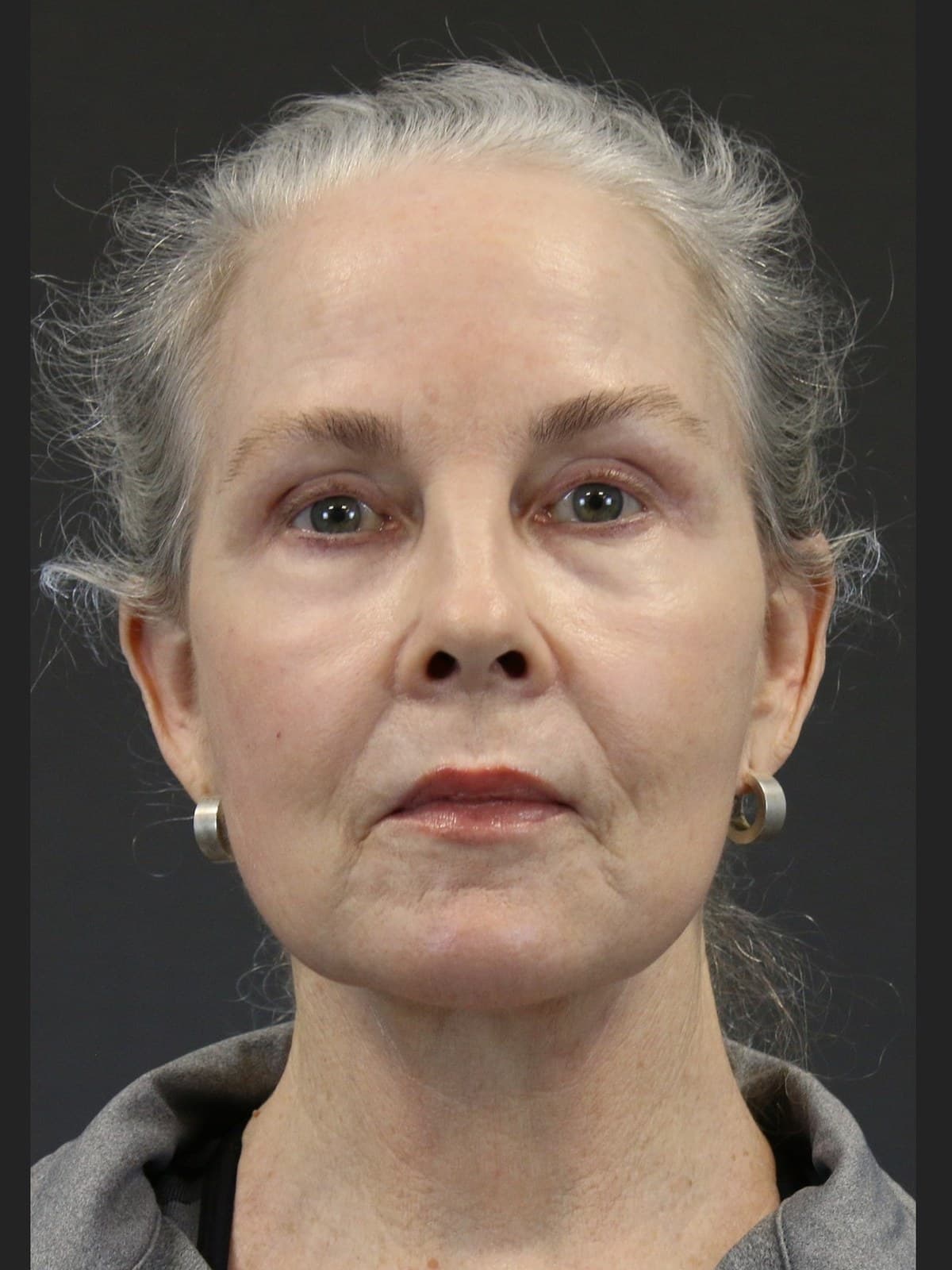 BeforeAfter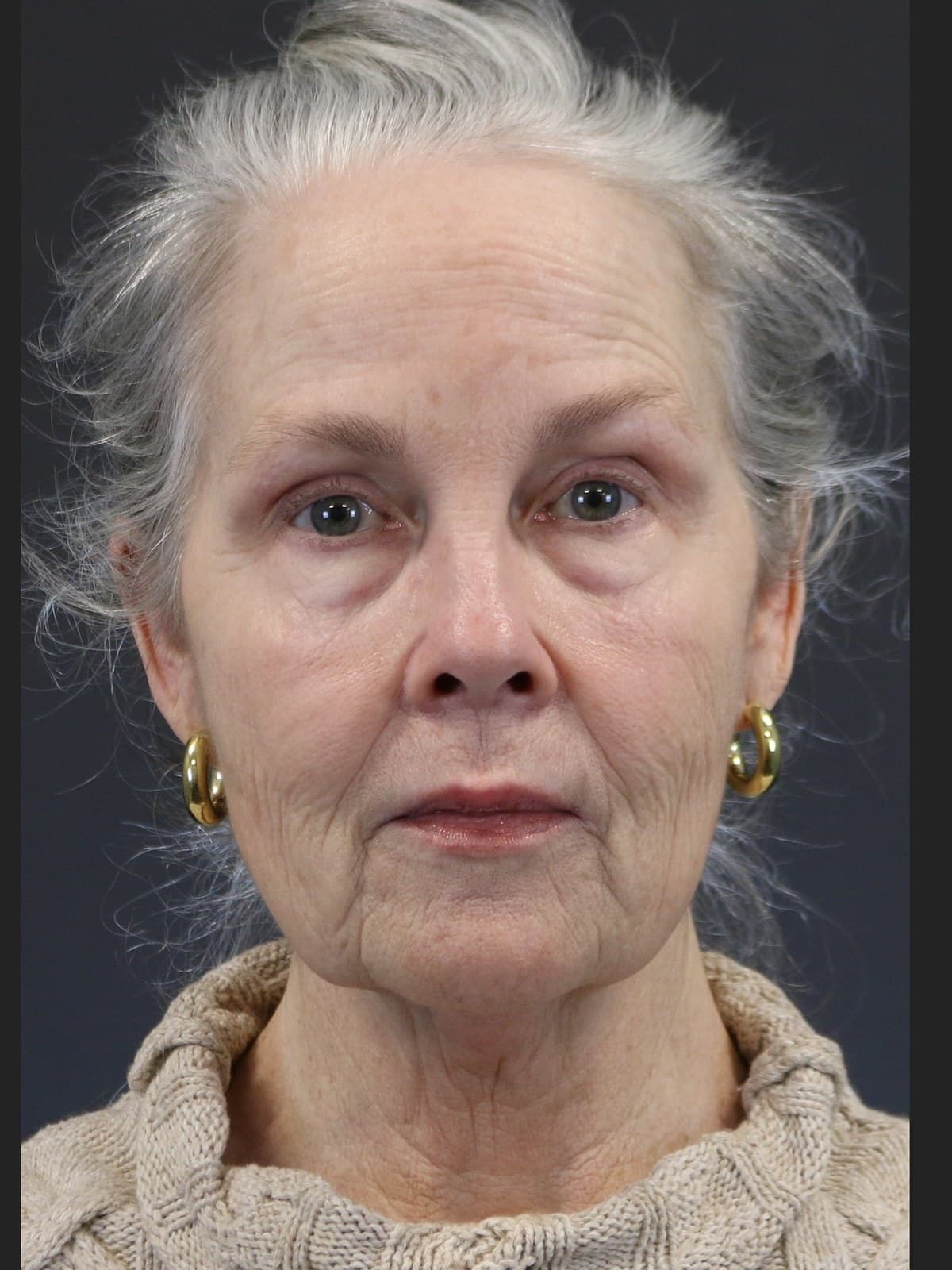
Individual results may vary. The photographs shown are of actual patients of Dr. Keni who have consented to their use.
Common questions
- Will a facelift improve my skin?
- It will not. A lift repositions tissue and the same skin arrives in the new position. Texture, fine lines, pigment and pore size are a separate problem needing a separate tool, which is why plenty of facelift patients also have their skin treated.
- Laser or microneedling?
- Fractional CO2 resurfaces the surface and gives the larger change in texture and pigment, with real downtime. Radiofrequency microneedling works deeper without removing the surface, so recovery is far shorter and the change is more gradual. Skin tone matters to the choice as well.
- Is resurfacing safe in darker skin?
- It calls for more caution. Removing the surface carries a higher risk of pigment change in darker skin tones, and treatments that spare the surface are usually more predictable. This is a conversation to have specifically rather than generically.
- Do I need a procedure at all?
- Sometimes not. Some people arrive asking for a device and leave with a skin care plan and nothing else. If that is the honest answer for your skin, it is the one you will get.
Financing available through CareCredit. See financing options