
What is actually happening
The platysma is a thin sheet of muscle spanning the neck and running up into the lower face, continuous with the layer a facelift works on. In youth its two halves meet in the midline and hold the neck in a clean line.
Over time the front edges separate and lose tone. The free edges become visible as the two vertical cords people notice first, and the support the sheet was providing gives way, so the angle under the jaw softens and disappears.
The bands are muscle. Skin is not what is holding your neck up.
That is the whole reason the operation treats the platysma directly rather than tightening the covering over it. A repair that only pulls skin looks good briefly and then reports back.
What is worth ruling out first
Four separate things produce this complaint, and they are frequently combined in one neck.
Platysmal separation gives the vertical cords. This is the one that needs the muscle addressed, and no amount of fat removal or skin tightening substitutes for it.
Submental fat is genuine excess under the chin. It responds well where the muscle and skin around it are sound.
Chin projection is the one most often missed. If the chin sits back, the distance from jaw to neck is short and reads as fullness whether or not anything is there. Examined in profile, it takes moments to identify, and the answer is a chin procedure rather than a neck one.
Skin quality decides how much any of the above will show. Skin that has lost its elasticity will not redrape over a corrected neck the way younger skin does, and that changes what is realistic.
Significant weight loss deserves a line of its own, because the neck it leaves behind is its own situation. When the laxity arrived as the weight came off, there is almost always banding to deal with alongside the fullness, and clearing the fat by itself leaves the cords standing. Those necks generally need the muscle addressed directly, which means a platysmaplasty.
They also tend to need the lower face treated in the same operation. If I sharpen a neck and leave the jawline where it was, the two no longer belong to the same person, and you will see that in a photograph long before you can name it. So the conversation about a weight-loss neck is usually a conversation about a neck and a lift together, and I would sooner have it early than spring it on you.
Where a device fits, and where it does not
Radiofrequency contraction has a real place in a mild case: a localized area, modest laxity, someone who is not a candidate for or not ready for open surgery. I offer it and it does what it does.
What it will not do is release a ligament, and it cannot repair a separated muscle. The most useful thing a consultation can tell you is that the smaller procedure will not get you what you want, and I will say so.
The question I am asked most in this category is whether the fat can simply be suctioned out and nothing else done. In my hands that is rare. Take fat out of a neck and you leave the skin above it to redrape onto a smaller contour, and skin with any laxity at all will not do that convincingly. So I usually pair the fat removal with FaceTite, which contracts the skin down into the space the fat has left. Shrink-wrapping is the closest description I have for what it does.
For that to be the right plan you need genuinely good skin quality, no visible laxity to speak of, and fullness as the actual complaint. That is a narrower group of people than the ones who ask for it.
There is one more thing I look for before agreeing to it. Fullness can be concealing platysmal bands, and taking the fullness away can bring them into view. If your examination suggests that is a risk in your neck, you will hear it from me before anything is booked, and not afterward when you are looking in a mirror asking what happened.
What treats it
Results
 BeforeAfter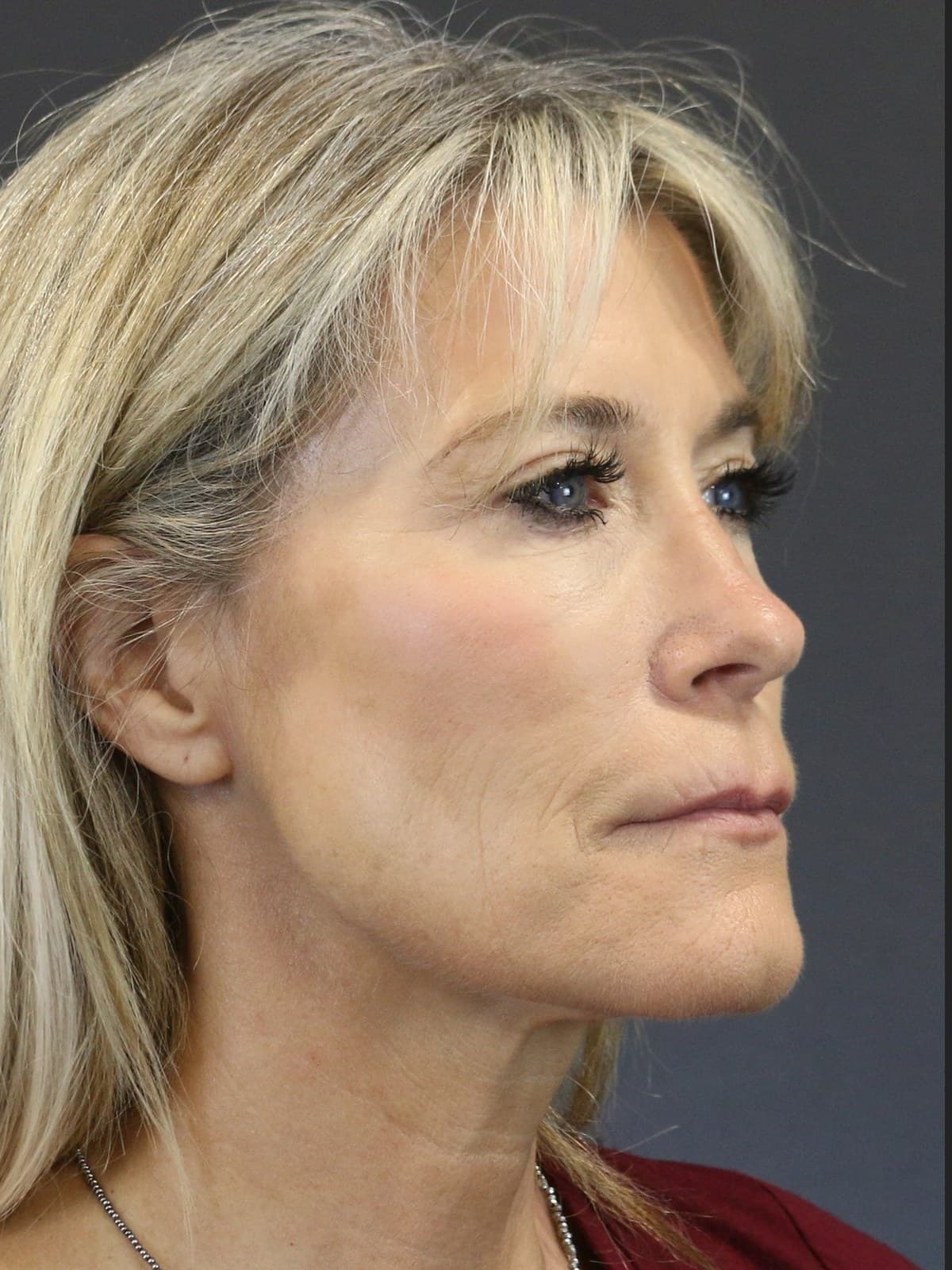
 BeforeAfter
 BeforeAfter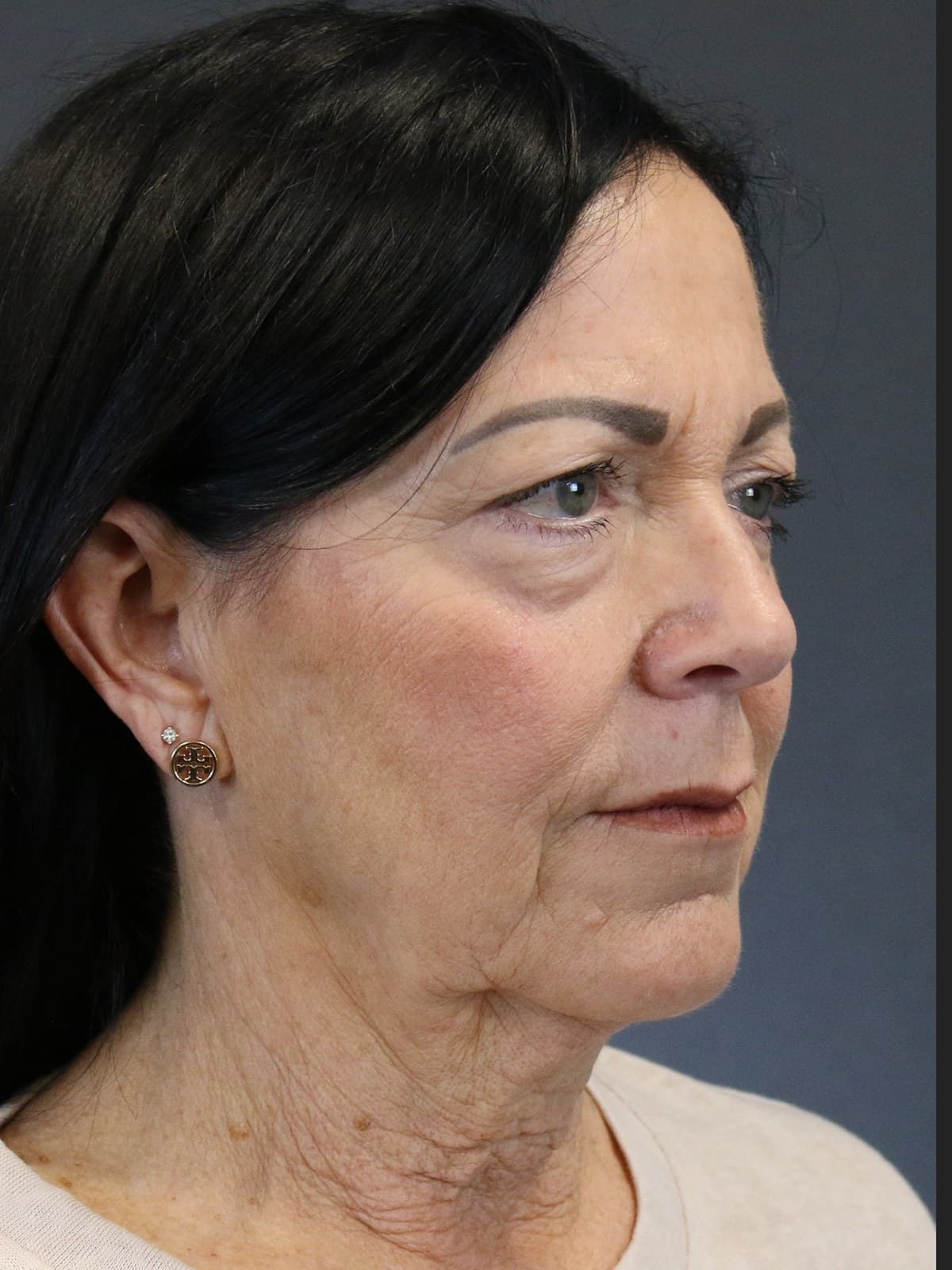
Individual results may vary. The photographs shown are of actual patients of Dr. Keni who have consented to their use.
Common questions
- What are the vertical cords in my neck?
- They are the edges of the platysma, a broad sheet of muscle running from the collarbone up into the lower face. With time its front edges separate and become visible as two vertical bands, most obviously when you tense or speak.
- Will tightening the skin fix them?
- No. The bands are muscle. Pulling the skin over them stretches the covering without changing what is underneath, and the cords reappear. This is why the operation addresses the platysma directly.
- Can liposuction alone give me a jawline?
- It depends entirely on what is producing the fullness. Removing fat helps where fat is the problem and the skin and muscle beneath are sound. Where the platysma has separated or the skin has lost its elasticity, taking fat out of a lax neck can leave it looking emptier and no tighter.
- Why are you examining my chin when I came about my neck?
- Because a proportion of people unhappy with their neck have an anatomically normal neck and a chin that sits back. Chin projection sets the distance between the jaw and the neck, and when that distance is short it reads as fullness. It is worth ten seconds of examination before anyone plans an operation.
Financing available through CareCredit. See financing options