
What is actually happening
The chin is one of the anchors the eye uses to judge whether a face is balanced. It sets the frame that the jawline and the neck are read against, and it does most of that work in profile.
When the chin sits back relative to the rest of the face, the distance from the jaw to the neck is short. A short distance reads as fullness under the chin whether or not there is any excess tissue there at all.
The complaint is about the neck. The cause is a few millimeters further forward.
This is why it is worth examining before anyone books a neck operation. Adding projection lengthens the jawline and opens the angle beneath it, and it does so without touching the neck.
What is worth ruling out first
The question to settle is whether there is genuinely something under your chin, or whether the geometry is making you read fullness that is not there.
Real submental fullness means fat or lax platysma under the chin, and treating the chin alone will improve the profile without removing it. Plenty of people need both, and knowing that in advance is better than discovering it afterward.
Projection alone is the case where the neck is structurally fine. Operating on that neck treats the symptom and leaves the cause.
Bite and jaw position is the one that changes the plan entirely. If orthodontics or jaw surgery is anywhere on your horizon, this conversation should wait until that is settled, because moving the jaw moves the whole frame.
Who this suits
It is a particularly good operation for younger patients whose only concern is profile balance, and it is quick with a benefit out of proportion to its size.
The implants I use are extended anatomical, and the reason that matters is the lateral extensions, which carry into the pre-jowl area. Where that region is deficient, and it often is, you get improvement along the jawline that a simple button implant would miss entirely.
You do have to be comfortable with the idea of an implant. Some people are not, and that is a fine reason to choose something else.
Which raises the obvious question, and it deserves an answer here. Declining an implant does not end the conversation. There are two other ways to add projection at the chin: a hyaluronic acid filler, which is temporary, or your own fat transferred into the area. Either will improve a profile, and for someone who wants to see what more chin looks like on their own face before committing to anything permanent, filler is a reasonable way to find out.
I will be straight about the ceiling on both. Neither matches what a well-chosen implant does for a chin that genuinely sits back. An implant changes the frame the soft tissue is draped over. Filler and fat sit on top of that frame and soften the shortfall. Where the deficiency is modest, softening it is often plenty. Where it is marked, you will see the difference between the two approaches, and I would want you to know that going in.
What treats it
Results
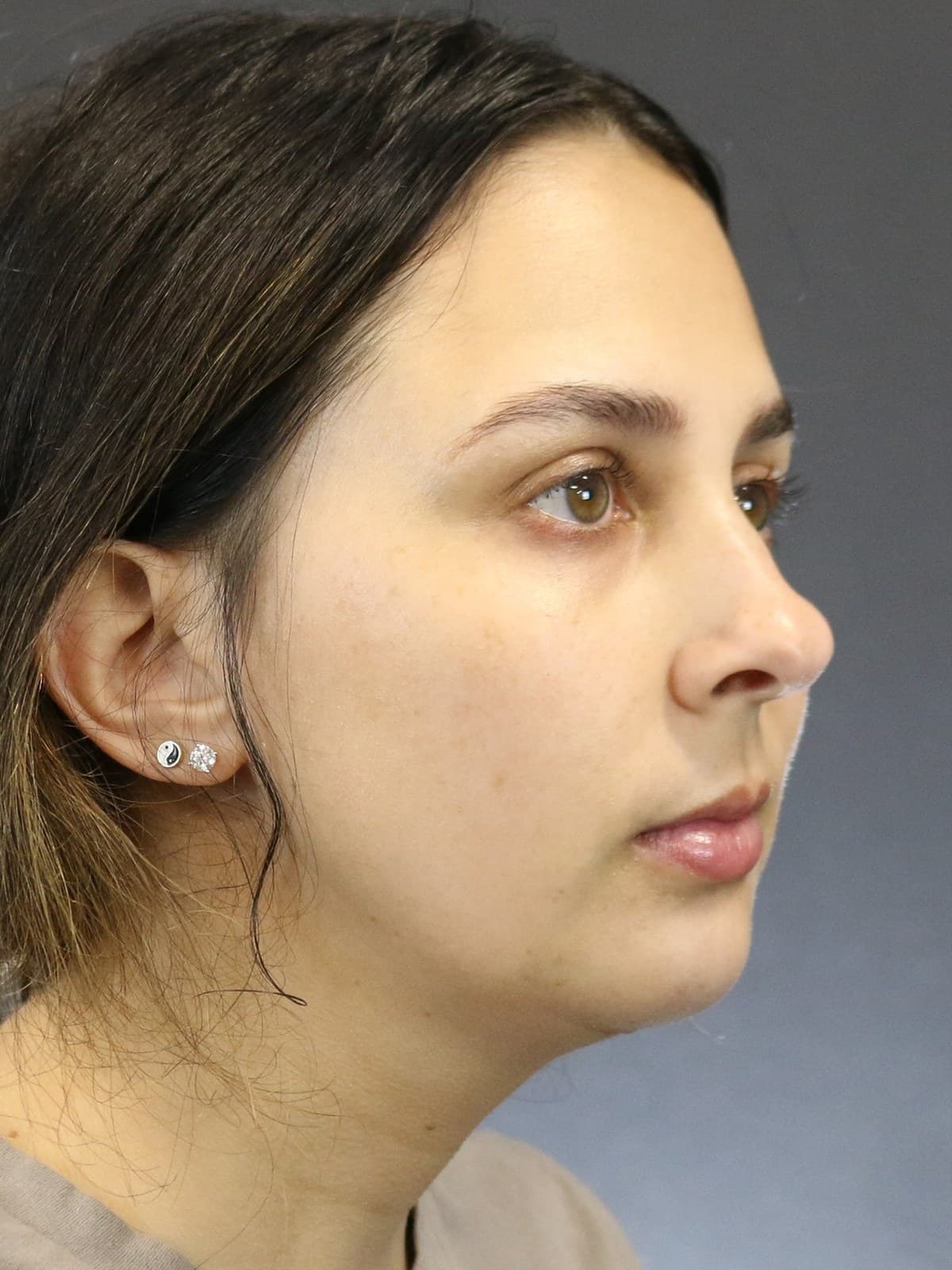 BeforeAfter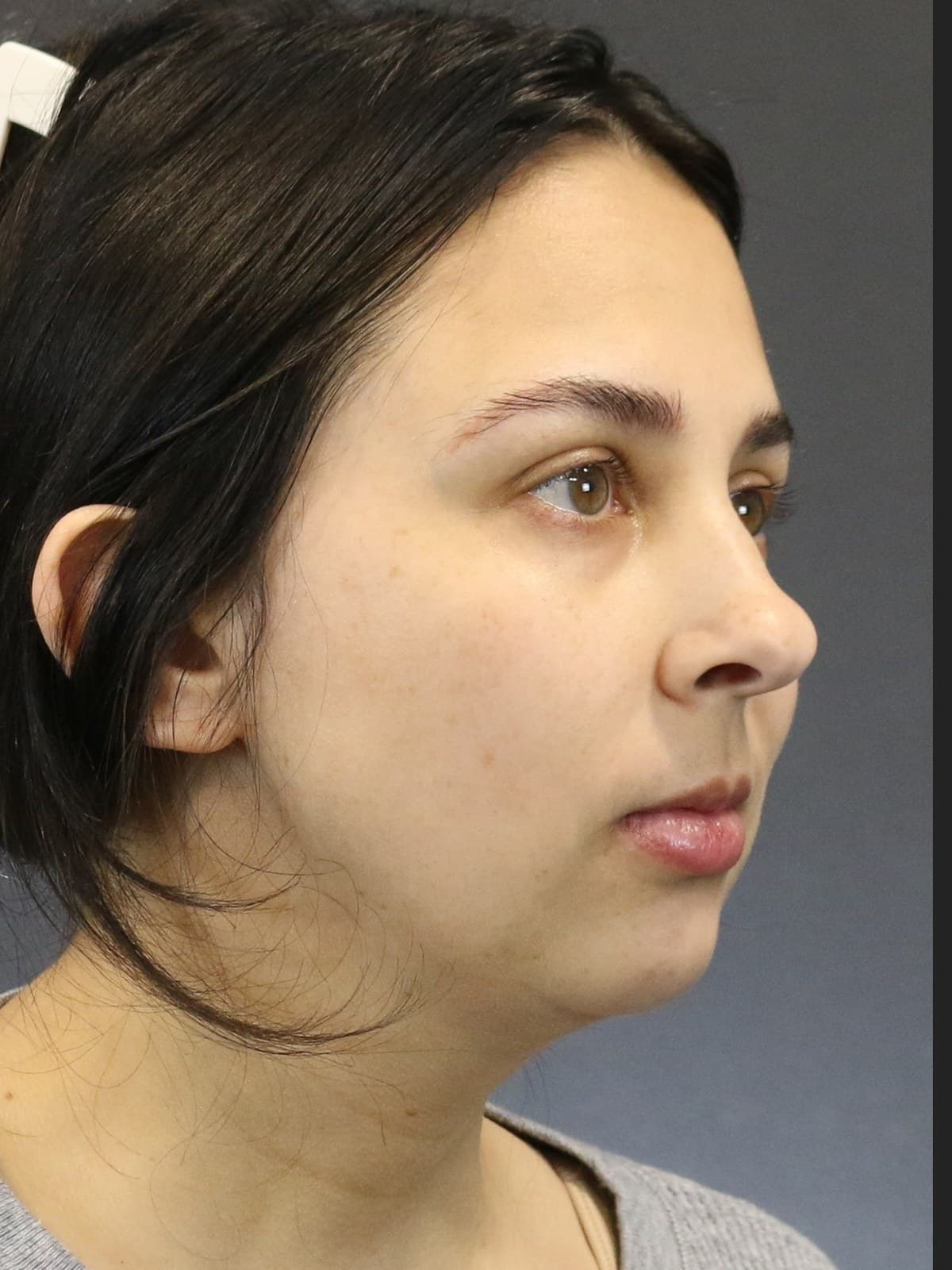
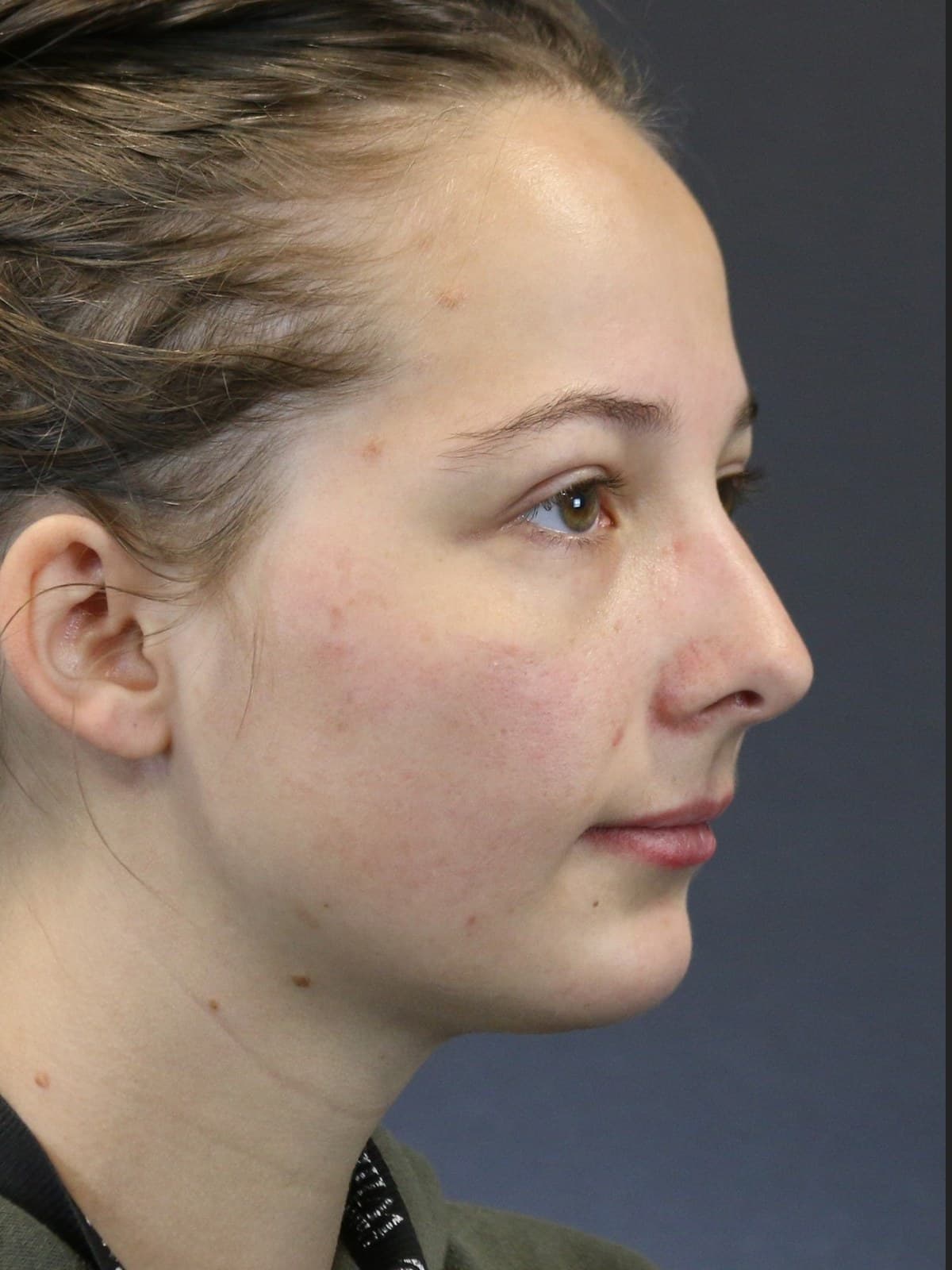 BeforeAfter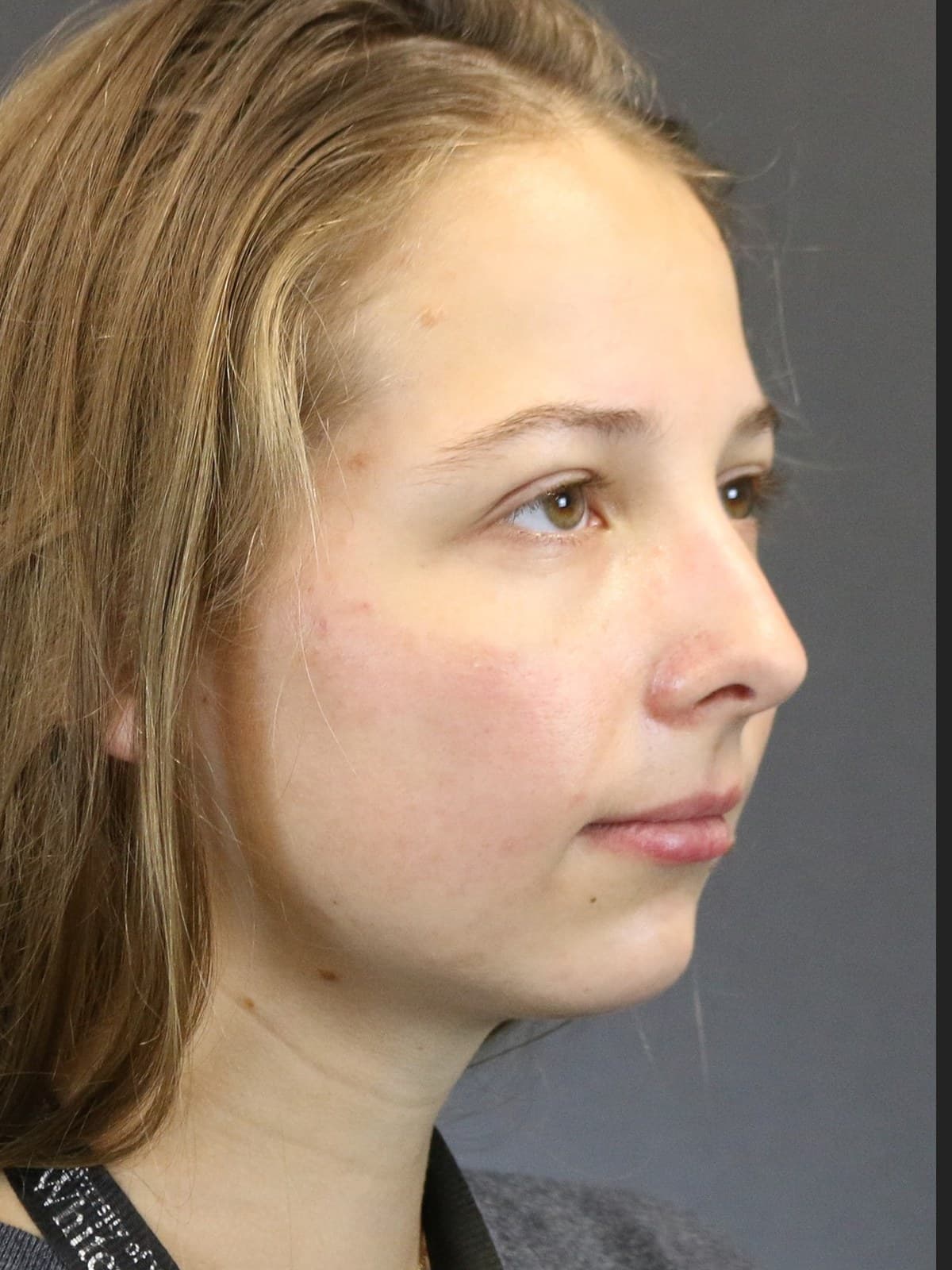
Individual results may vary. The photographs shown are of actual patients of Dr. Keni who have consented to their use.
Common questions
- Why would a chin procedure help my neck?
- Chin projection sets the distance between the jawline and the neck. A chin that sits back shortens that distance, and short reads as full, regardless of how much fat is actually under there. Adding projection lengthens the jawline and sharpens the angle beneath it.
- How do I know if this is me?
- Look at a profile photograph rather than a mirror. Straight on is the one angle at which chin projection is almost impossible to judge, which is why so many people arrive convinced the problem is their neck.
- Is it an implant or is the bone moved?
- I use an implant. It is placed through a small incision hidden in the crease under the chin, and I release the soft tissue off the bone and seat the implant against it.
- Why not go through the inside of the lip?
- Many surgeons do. I do not, because I am placing a permanent implant against bone and I would rather it never met oral bacteria or saliva on the way in. For an operation whose main serious risk is infection around an implant, that trade is worth making.
- Will it look obvious?
- The goal is proportion relative to your own features, and it is a change measured in millimeters. Sizing is settled with you at the consultation, before the day of surgery. In some patients I customize the shape.
Financing available through CareCredit. See financing options